Architects Rally to Protect Islamabad’s F-9 Park, Oppose Cricket Stadium Plans
The Institute of Architects Pakistan (IAP) and the IAP Green Initiative have strongly opposed the government’s proposal to build an international cricket stadium inside Islamabad’s iconic F-9 Park.
While expressing support for the growth of Pakistan’s sports infrastructure, the organizations, in a formal letter to Pakistan Cricket Board (PCB) Chairman Mohsin Naqvi, warned that the chosen site poses serious risks to the city’s environment, biodiversity, and public accessibility.
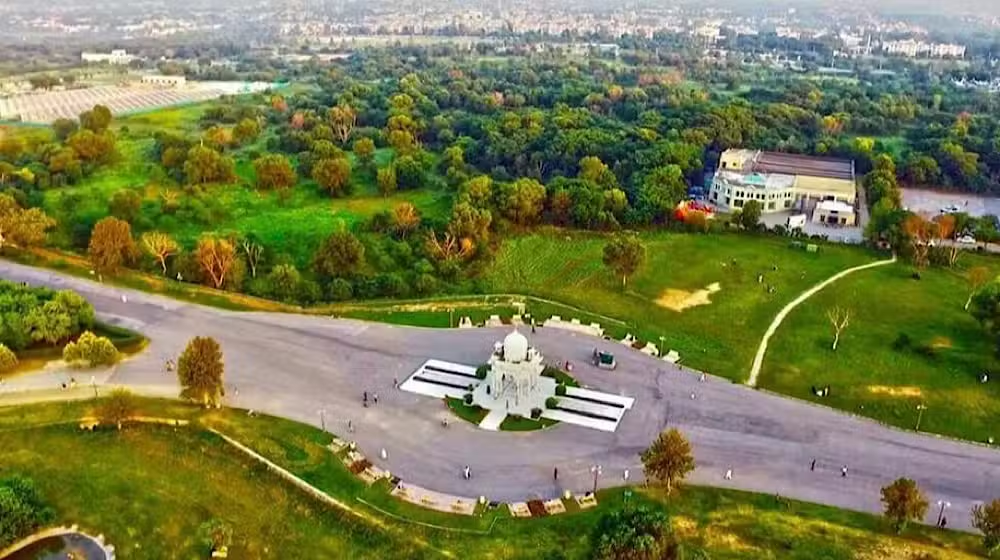
According to the letter, F-9 Park serves as the “green lungs” of Islamabad—naturally filtering polluted air, reducing urban flooding through its drainage system, preserving biodiversity, controlling extreme temperatures, and providing thousands of citizens with free recreational space.
The IAP stressed that the park’s land is legally designated for public use and environmental preservation, not for large-scale, ticketed infrastructure. They also raised concerns over NESPAK’s role in the project, noting that while it is a respected engineering body, it lacks the specialized urban ecological planning expertise required for such a sensitive and high-impact development.
At a time when green conservation is a national priority, cutting down hundreds of mature trees to build the stadium would be both environmentally damaging and unnecessary. The letter further highlighted that major sports venues require robust public transport access to prevent traffic congestion, air pollution, and disruptions to surrounding communities—factors the F-9 site currently cannot support.
Transforming a free, open-access public park into a restricted, ticketed facility would deprive citizens of one of Islamabad’s rare, large-scale green spaces. The IAP recommended building the stadium on the city’s outskirts, where new infrastructure could be developed without harming ecologically protected zones.
The architects’ body also offered technical and professional assistance to identify suitable alternative sites, design environment-friendly stadium solutions, and facilitate discussions between stakeholders to ensure Islamabad’s long-term environmental and social well-being.