Pakistan’s Second-Hand Clothing Imports Reach Record Levels as Poverty Soars
Pakistan has witnessed an unprecedented surge in second-hand clothing imports, touching 1.137 million tonnes valued at $511 million during the last fiscal year. This marks a new all-time high, surpassing the previous record of 990,266 tonnes worth $434 million recorded in FY24.
The sharp increase reflects the growing reliance of millions on affordable clothing, especially in the wake of the country’s worsening poverty crisis. According to the World Bank, almost 45% of Pakistan’s population now lives below the poverty line. With the poverty threshold recently raised from $3.65 to $4.20 per person per day, the proportion of lower-middle-income households classified as poor has jumped from 39.8% to 44.7%.
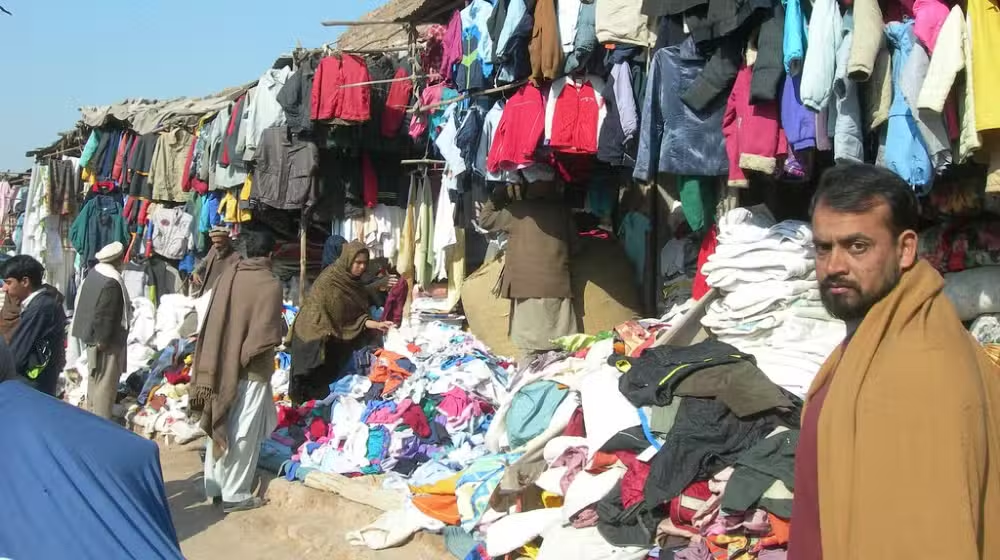
In this economic climate, landa bazaars — locally known as flea markets — have become a vital source of clothing for low and middle-income families.
Rising Poverty Fuels Demand for Used Clothing
Muhammad Usman Farooqui, General Secretary of the Pakistan Second-Hand Clothing Merchants Association (PSHCMA), attributes the record-high imports to growing financial distress.
“More families from low and middle-income backgrounds are turning to affordable used garments to make ends meet,” Farooqui explained.
However, he emphasized that high import taxes are making these clothes less affordable. Currently, second-hand clothing imports face:
-
10% regulatory duty
-
5% customs duty
-
6% advance income tax
-
Approximately 5% sales tax
In addition, traders pay a 5% sales tax on the profit margin, and domestic sellers earning over Rs. 600,000 annually must pay income tax.
New Tax Rules Add Pressure
The Finance Bill 2024 has introduced stricter regulations, designating used clothing importers as withholding agents. They must now collect:
-
0.1% advance tax from distributors, dealers, and wholesalers
-
2% to 2.5% tax from unregistered retailers
Many traders, especially small-scale vendors, remain unregistered with the Federal Board of Revenue (FBR) and operate without fixed premises or proper documentation, making compliance difficult.
Where the Clothes Come From
Pakistan mainly imports used clothing from Europe, the USA, Japan, Korea, China, and Canada. Exporters in Pakistan’s special economic zones handle 60-70% of these imports, sorting them for re-export. Only 10-20% remain for domestic sale.
Import duties are currently set at Rs. 36 per kg for clothing and Rs. 66 per kg for shoes. Farooqui believes lowering these rates could ease the burden on the poor.
Price Comparison – New vs. Used
Market surveys highlight why second-hand clothing remains in high demand:
-
Imported used jeans: Rs. 300–400
-
Second-hand shirts: Rs. 250–300
-
Used sports shoes: Rs. 600–800
In contrast:
-
Locally made new sports shoes: Rs. 2,500–3,500
-
Imported branded shoes: Rs. 4,000–5,500
With such stark price differences, the demand for affordable imported used clothing is likely to continue growing — unless rising taxes make it unaffordable for those who need it most.