Pakistan’s Power Sector Strengthens as K-Electric Launches First-Ever Retail Sukuk
In a country where high inflation continues to challenge household savings and investment opportunities, a groundbreaking development has emerged in Pakistan’s financial landscape. K-Electric, the nation’s only privatized and vertically integrated power utility, has introduced Pakistan’s first public Retail Sukuk, marking a significant milestone for both investors and the energy sector.
Rising Demand for Shariah-Compliant Investments
With inflation eroding purchasing power, Pakistanis are increasingly seeking safe and rewarding ways to grow their savings. Globally, Sukuk — Islamic bonds compliant with Shariah principles — have gained prominence as a reliable and ethical alternative to conventional bonds. Offering both financial returns and religious appeal, Sukuks are now among the fastest-growing instruments in Islamic finance.
Industry reports project that global Sukuk issuance will surpass USD 1 trillion by 2025, with Southeast Asia leading the market. These instruments are also expected to play a major role in the debt capital markets of Organisation of Islamic Cooperation (OIC) member states, while continuing to strengthen their position in emerging markets.
K-Electric Pioneers Retail Sukuk in Pakistan
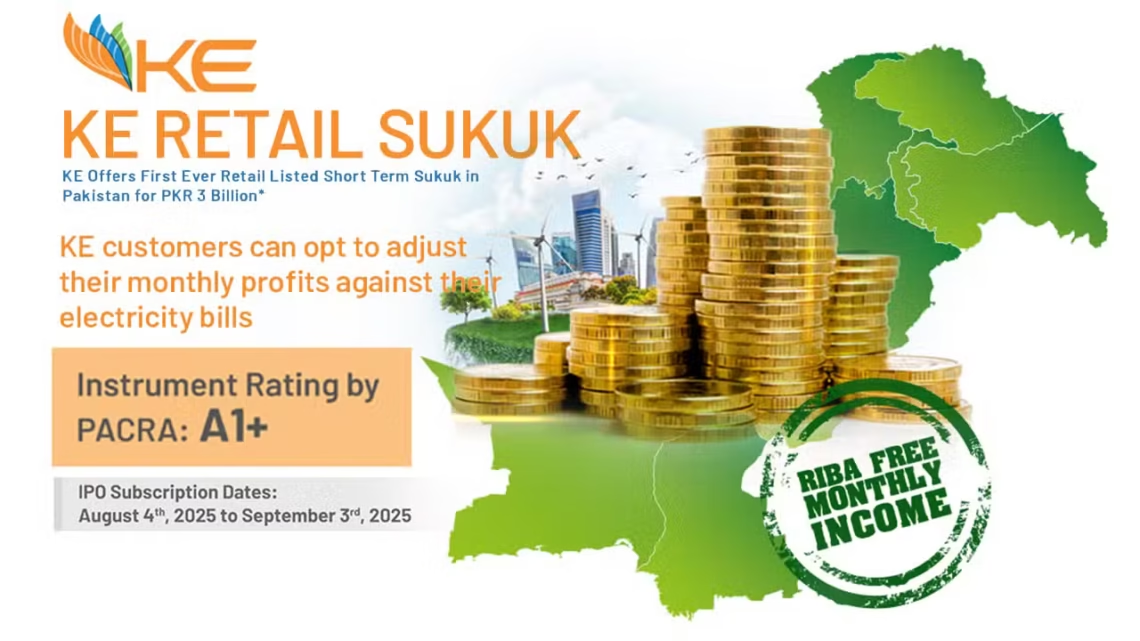
K-Electric has a proven history of successfully issuing Sukuks, but its latest initiative takes innovation a step further. The company has launched the first short-term public Sukuk offering in Pakistan, opening doors for retail investors to participate in the energy sector with instruments having a tenure of less than 12 months.
The Retail Sukuk is valued at PKR 3 billion (USD 10.8 million), with an additional greenshoe option of PKR 1 billion (USD 3.6 million). Already, PKR 1 billion was raised during a Pre-IPO round in April 2025. The profit rate will be pegged at a 20 basis point premium over the three-month Karachi Interbank Offered Rate (KIBOR), ensuring attractive returns for investors.
In a unique feature, eligible investors will also have the option to offset their electricity bills against their Sukuk investments, further enhancing its appeal.
How Sukuk Differs from Conventional Bonds
Unlike traditional lending, Sukuk represents ownership in the underlying assets and operations of a company. For K-Electric, this means investors are not merely lending money but are becoming partners in Karachi’s power infrastructure. Each investment supports the utility’s efforts to provide reliable electricity to homes, industries, and businesses, making investors stakeholders in the city’s energy future.
A Game-Changer for Pakistan’s Energy and Finance Sectors
The launch of K-Electric’s Retail Sukuk comes at a crucial time when Pakistan urgently requires investment in energy infrastructure to meet growing demand. By offering a Shariah-compliant financing option, K-Electric is not only diversifying its funding base but also helping reduce reliance on the circular debt system that has long burdened the sector.
This financial innovation highlights the growing shift towards Islamic finance in Pakistan, opening new opportunities for both institutional and retail investors. As utilities prove the effectiveness of Sukuk financing, other sectors such as water, telecommunications, and transport may adopt similar models, creating a diverse and resilient financing ecosystem.
The Future of Islamic Financing in Pakistan
Islamic finance represents more than just capital generation; it reflects a move toward ethical, interest-free transactions. With the Retail Sukuk, investors are not merely purchasing a financial instrument — they are contributing to a sustainable business model that aligns with faith-based values.
For Pakistan’s economy, the success of this Sukuk could set the stage for broader financial transformation, where individuals invest not only in profits but in the progress of essential national infrastructure.