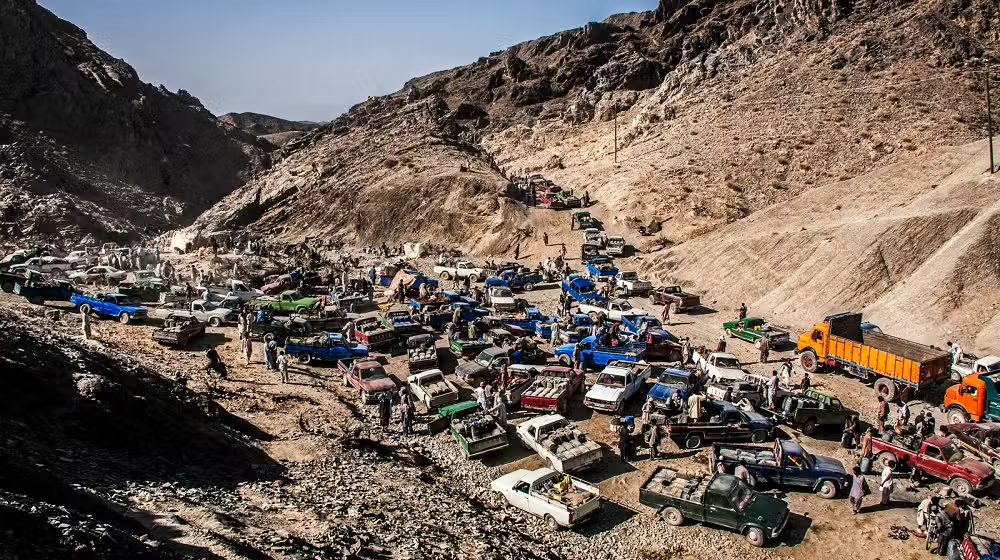
Pakistan to Introduce Real-Time Digital Monitoring of Petroleum Products to Curb Smuggling and Revenue Losses
In a major reform for the country’s energy sector, the Government of Pakistan is set to launch a real-time digital tracking system for petroleum products within the next month. The move is aimed at tackling smuggling, fuel theft, and adulteration, which have been causing massive annual revenue losses estimated between Rs. 300 billion to Rs. 500 billion.
This initiative is part of the Petroleum (Amendment) Act 2025, recently approved by the National Assembly, which modernizes the nearly 100-year-old Petroleum Act 1934. The updated legislation empowers authorities to use IT-based monitoring systems to track every litre of fuel—from import and production to storage, transportation, and final sale.
Key Features of the Petroleum Tracking System
The new system, developed in coordination with the Oil and Gas Regulatory Authority (OGRA) and industry stakeholders, will provide end-to-end visibility of the petroleum supply chain. It will cover:
-
Petrol stations nationwide
-
Transportation routes for oil tankers
-
Designated fuel storage facilities
By integrating real-time data, authorities aim to eliminate loopholes that allow illegal fuel trading to flourish.
Background: A Persistent Smuggling Crisis
The reform comes amid growing concerns about large-scale petroleum smuggling and its damaging impact on both the economy and legitimate businesses.
-
A 2020 inquiry ordered by then Prime Minister Imran Khan revealed fuel smuggling worth over Rs. 250 billion annually from Iran.
-
An intelligence report from April 2024 found that 10 million litres of Iranian petrol and diesel are smuggled into Pakistan daily, causing Rs. 227 billion in lost revenue.
The same report identified:
-
533 illegal petrol stations
-
105 known fuel smugglers
-
Complicity from personnel in over a dozen law enforcement agencies
It also highlighted multiple unregulated border crossings and well-established smuggling routes across the country.
Stronger Enforcement and Penalties
The Petroleum (Amendment) Act 2025 introduces tougher penalties to deter illegal trade in petroleum products:
-
Rs. 1 million fine for illegal import, transport, storage, sale, refining, or blending of petroleum products.
-
Rs. 5 million fine for repeat offenders.
-
Rs. 10 million fine and immediate closure for facilities operating without a valid licence, along with confiscation of storage tanks, machinery, and fuel.
For storage facilities with expired or cancelled licences, a six-month grace period will be granted for renewal. Failure to comply will result in sealing the premises and imposing a Rs. 1 million fine.
Facilities caught storing or selling smuggled fuel will face:
-
Immediate closure
-
Confiscation of assets
-
Rs. 100 million fine
-
Licence cancellation by the Department of Explosives
Vehicles involved in smuggling will be seized under the Customs Act 1969, with goods handed over to customs for further legal action. Notably, confiscation proceedings can begin before a court conviction.
Legal and Administrative Powers
The law grants trial powers to the Sessions Court, while administrative enforcement will be handled by deputy commissioners, assistant commissioners, and customs officers. Appeals against decisions can be filed with the High Court within 30 days.
A Step Towards Transparency in Pakistan’s Fuel Sector
With this landmark reform, Pakistan is taking a decisive step to modernize petroleum regulation, protect government revenues, and ensure fair competition in the energy market. The real-time tracking system is expected to close the chapter on unchecked fuel smuggling that has plagued the nation for decades.